

This Week in Retail #120
Fewer+better stores, and more immersive experiences

Hey Friends,
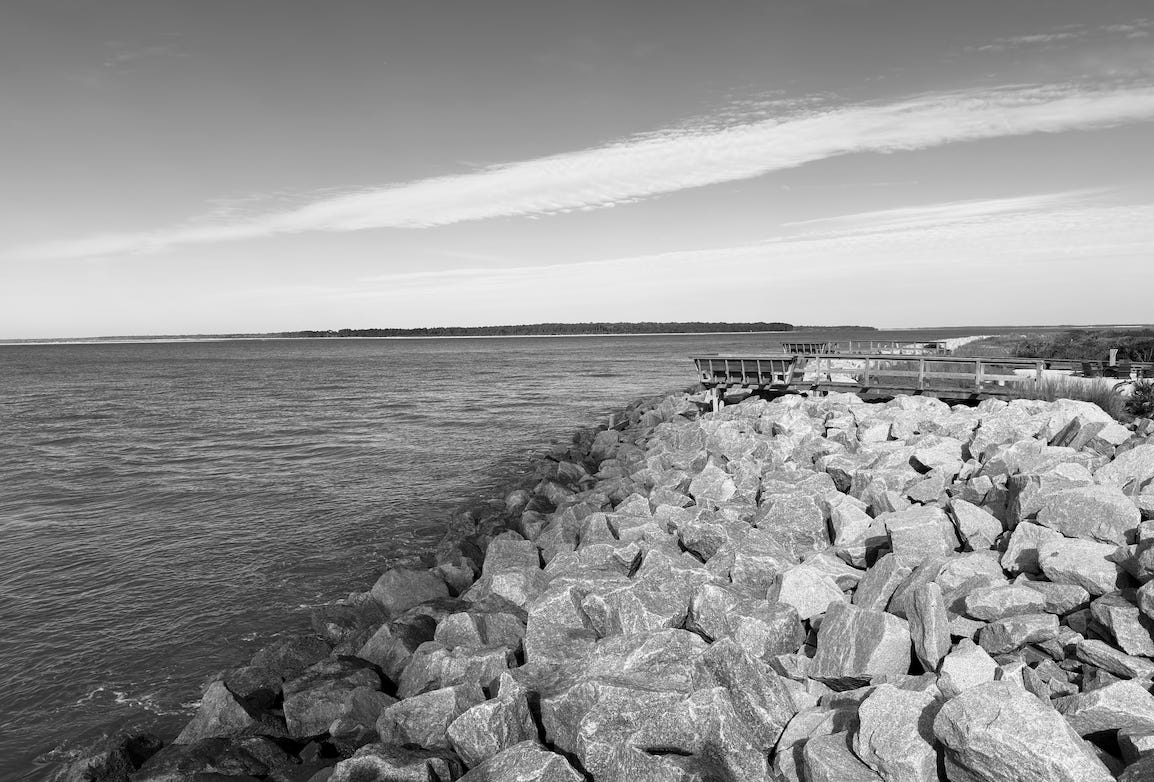
It’s good to be back. I popped away for a little vacation during the kid’s spring break last week to Seabrook Island. We usually stay at Kiawah when we go but this time we ventured on the other side of the island to check it out. A good reset is often great for the creative spirit. Perhaps I missed it but the fear of airport madness for us was worse than the reality (although Kansas City and Charleston aren’t necessarily huge hubs)…..spring break and a DHS budget standoff make for the perfect storm.
There is something about traveling that gives you a really good sense of the retail world. Traveling through the airport, Parke sweatshirts seem to be the “in-the-know teen” uniform. We often visit the Sanctuary on Kiawah, which is undoubtedly one of my favorite places in the world to hang out, and it too has it’s own retail influence……By mid-afternoon, the terrace fills with a very specific ecosystem: Peter Millar vests zipped with quiet confidence, Gucci loafers, and Lilly Pulitzer dresses in colors bright enough to signal passing boats. They gather not so much to relax as to participate in a delicate social choreography, where the true sport isn’t golf, but the subtle art of appearing effortlessly affluent while holding a $25 cocktail. I love it, I love the feeling, and I love that my kids can run around like hooligans and I’m not judged for having a mid-day cocktail or three.
A lot happened in retail over the last week.
This week’s stories all point to a market that’s still growing, but evolving fast. Brands are expanding, consumers are spending, and companies are getting sharper about how they scale. The common thread is discipline. Whether it’s a niche fashion label entering new categories or a legacy retailer finding new distribution, everyone is playing more strategically. From Aimé Leon Dore’s move into womenswear to Peloton’s push into commercial and Build-A-Bear’s Walmart expansion, growth is increasingly about meeting customers where they are. At the same time, companies like Lululemon and Torrid are adjusting to a more normalized environment.
Let’s get into it……
Aimé Leon Dore is reportedly preparing to open a new flagship while also moving into a formal women’s collection. That second move may be the bigger story. Founder Teddy Santis has built the brand into a cultural force with a tight assortment, limited drops, and a strong point of view rooted in New York nostalgia. Until now, the brand has largely operated in a men’s and unisex lane, even as female demand has grown organically. A dedicated women’s line signals a shift from niche streetwear into a broader lifestyle positioning, closer to brands like Ralph Lauren. Combined with physical retail expansion, this is less about adding stores and more about building a world customers want to live in. Aimé Leon Dore is transitioning from cult favorite to scaled luxury player, and doing it without losing its identity.
The National Retail Federation is forecasting 4.4% retail sales growth in 2026, pushing total sales to $5.6 trillion. That’s a step up from both last year’s performance and the 10-year average of 3.6%. In 2025, retail sales reached $5.4 trillion, with holiday alone surpassing $1 trillion, showing just how resilient the consumer has been. But the backdrop is far from perfect. A softening labor market, persistent inflation, and geopolitical tensions are all creating headwinds. NRF is betting that underlying consumer fundamentals and higher tax refunds will help offset that pressure. Retail isn’t slowing down, but it is becoming more dependent on macro tailwinds. Growth is there, just with less margin for error.
