

This Week in Retail #114.5
TWIR Bonus Edition: TikTok Addiction, Supply Chain Shakeups, and the future of Amazon Grocery

Today’s edition of TWIR is on the house

Hey Friends,
There’s a lot going on this week, so it seemed only fitting for a bonus edition of This Week in Retail. We’ll call it #114.5.
Let’s get into it…..
In the most not suprising, yet still head-scratching move…..Amazon is closing all of its Amazon Fresh and Amazon Go stores, refocusing its brick-and-mortar grocery strategy on Whole Foods Market. Some of the shuttered locations will be converted into Whole Foods stores, and the company plans to open over 100 new Whole Foods locations in the coming years. At the same time, Amazon will expand its same-day perishable grocery delivery service, which currently serves more than 5,000 communities and generates over $150 billion in gross grocery sales, signaling a shift toward online and delivery-focused operations.
The decision marks the end of Amazon’s roughly five-year experiment in conventional supermarket retail. Despite opening dozens of Amazon Fresh stores since 2020, the chain struggled to attract shoppers and compete with established grocers. Efforts to differentiate the stores, including expanding assortments, updating decor, emphasizing low prices, and integrating high-tech features like Dash Carts, failed to create a distinctive customer experience or a scalable economic model. Amazon acknowledged that it had moved too aggressively in attempting to capture market share and could not achieve the fundamentals required for traditional grocery success.
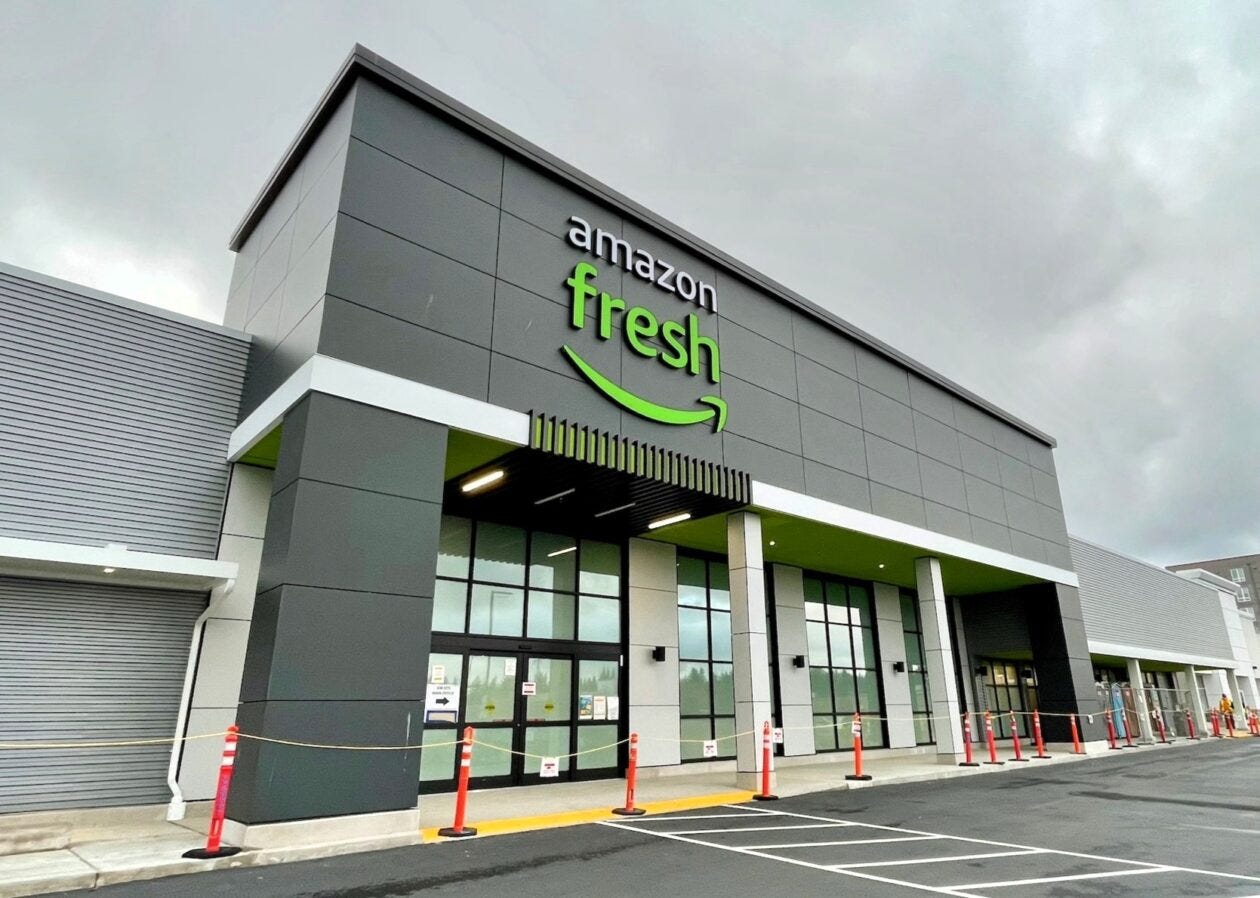
Analytically, the closures highlight Amazon’s recognition that physical grocery retail requires deep operational expertise and local market understanding, which has proven difficult to replicate at scale. The shift toward Whole Foods and delivery indicates a strategy of leveraging existing brand equity and infrastructure while minimizing the operational risks of running standalone stores. It also underscores Amazon’s focus on leveraging its technological and logistical strengths in e-commerce and delivery, rather than competing directly with established supermarket chains in brick-and-mortar formats. Experts suggest this is not a retreat from grocery but rather a recalibration: Amazon is likely to continue exploring physical grocery concepts in more controlled or experimental formats, such as the small-format Daily Shop, while doubling down on its growing online grocery presence.
UPS plans to eliminate up to 30,000 operational roles and introduce another voluntary driver buyout program as it continues to adjust its network to lower Amazon delivery volumes. UPS is continuing to cut costs and resize its U.S. network as it follows through on a planned 50% reduction in Amazon volume. After reducing Amazon shipments by about 1 million packages per day last year, UPS expects another 1 million daily packages to roll off in 2026, putting near-term pressure on results.
The volume decline contributed to a 3.2% year-over-year drop in domestic revenue in Q4, though CFO Brian Dykes said performance should improve once the Amazon glide-down wraps up in the first half of the year. UPS expects to emerge with a more agile and efficient U.S. network.
UPS is also leaning on a renewed Ground Saver agreement with the U.S. Postal Service, which shifts some final-mile deliveries to USPS. The company said the deal improves the economics of the product, with volume already ramping up and more packages expected to flow to USPS in the coming months.
Nike is laying off roughly 775 employees in Tennessee and Mississippi as it consolidates its U.S. distribution center operations and accelerates the use of automation and advanced technology across its supply chain. The company said the move is focused on reducing complexity, improving flexibility, and creating a more efficient and resilient distribution network, while supporting its broader turnaround and margin improvement goals.
The supply chain changes come as CEO Elliott Hill says Nike is in the “middle innings” of its turnaround, with encouraging progress in North America but a longer recovery expected in regions like China. Nike recently reshuffled leadership in Greater China and EMEA, with several senior executives departing as Hill centralizes reporting and reshapes the executive team.
Since taking over in October 2024, Hill has made sweeping organizational changes, including eliminating certain C-suite roles, reorganizing teams around sports rather than gender categories, and driving targeted layoffs as part of a broader effort to refocus the business and return to long-term profitable growth.
Jason Bell has been promoted to EVP and chief supply chain officer at Nordstrom, effective immediately. In the expanded role, Bell will also oversee transportation in addition to his existing supply chain responsibilities.
Bell joined Nordstrom in 2021 as SVP of supply chain operations, where he led network, fulfillment, and distribution initiatives. He previously held senior supply chain roles at H-E-B and spent 13 years at Target, most recently as VP of fulfillment operations overseeing large scale, multisite fulfillment and food supply chain expansion.
TikTok is undergoing significant changes in the United States as it completes the transition of its U.S. operations to a majority American-owned joint venture, a move designed to address national security concerns and prevent a potential nationwide ban. The transition has coincided with service glitches and outages, which TikTok attributed to a power outage at a U.S. data center, while some users have expressed concerns about moderation and censorship under the new structure. At the same time, TikTok has settled a social media addiction lawsuit ahead of a planned trial involving Meta and YouTube, joining Snap in a broader industry effort to address legal pressure around youth mental health and platform design. The company has also updated its privacy policy and terms of service, sparking concerns about expanded data collection and prompting some Americans to delete the app in response. These developments highlight TikTok’s evolving operational, legal, and regulatory landscape in the U.S., reflecting broader tensions around data privacy, user safety, and social media governance.
And finally……Dollar General is expanding its same-day delivery service through the DG app and website, now offering orders from more than 17,000 stores via its MyDG Delivery platform. The retailer aims to use the service to reach customers in underserved and rural communities, noting that roughly three-quarters of the U.S. population lives within five miles of a Dollar General location.
That’s all for today folks…..