

I Tried (and ranked) The Best Retail Mobile Apps and Here's What I Found
So you don't have to....

“The apps that grew weren’t just optimizing for checkout. They were getting people to spend time — and building a relationship where customers actually wanted to hear from them.”
Hey Friends,
Sometimes, if you want a clear view of where retail is heading, all you have to do is look in the palm of your hand.
Mobile has become the front door for modern retail, where discovery happens, loyalty is built, and transactions are completed in seconds. And while thousands of retail apps exist, a small group has separated itself by becoming daily habits for consumers, not just occasional tools.
Here’s a look at the 10 best retail mobile apps right now, ranked by real-world impact, innovation, and how well they connect digital with physical retail.
#1A Amazon
Retail · E-Commerce
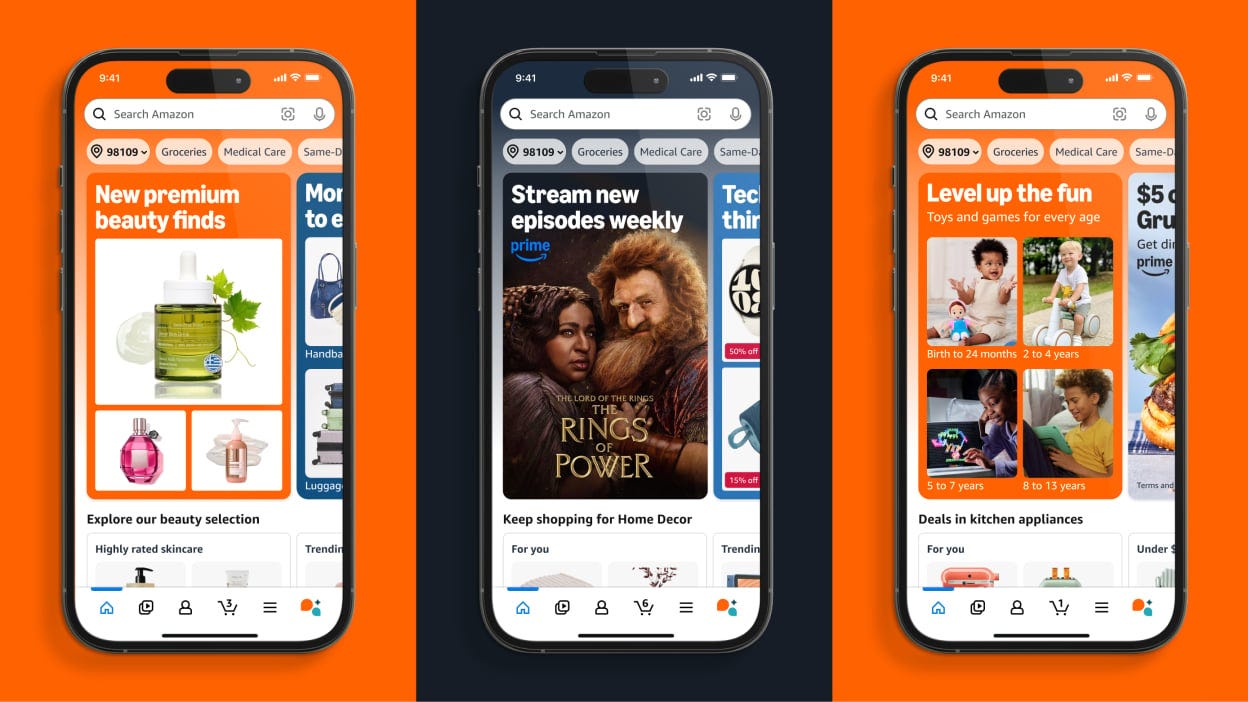
The gold standard for mobile commerce
Prime Users: Worldwide, Amazon Prime has 260 million subscribers, with 185 million in the U.S. alone.
✦ Pros
Unmatched product selection across virtually every category
Same-day and next-day delivery via Prime in most U.S. markets
Seamless integration with Alexa, Subscribe & Save, and Amazon Pay
Best-in-class search, reviews, and comparison tools
Consistently strong app store ratings (4.7 iOS / 4.3 Android)
✦ Cons
Counterfeit and low-quality third-party listings remain a persistent issue
App interface can feel cluttered with sponsored products
Prime membership required for best shipping benefits ($139/yr)
Returns process can be cumbersome for third-party items
📊 Despite Temu’s explosive growth, Amazon remains the undisputed usage leader — a lead that reflects deep customer loyalty and logistics infrastructure no competitor has yet matched.
#1B Chick-Fil-A
Loyalty is the core of everything
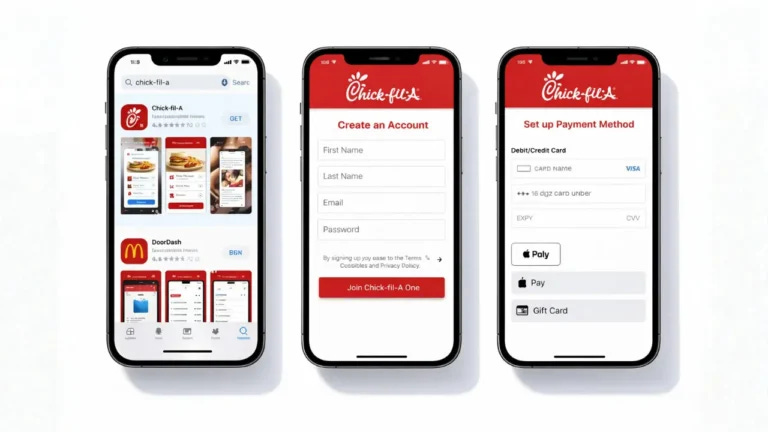
At the center is Chick-fil-A One, which is one of the simplest but most effective rewards programs in QSR.
✦ Pros
Strong, easy-to-use loyalty program (earn and redeem quickly)
Seamless mobile ordering with multiple pickup options (drive-thru, curbside, carry-out)
Check-in feature improves timing and reduces wait times
Saves favorite orders and preferences for quick reordering
High user satisfaction and consistent experience across locations
Improves order accuracy vs in-person ordering
Helps reduce congestion at busy stores
Frequent app-exclusive rewards and promotions
✦Cons
Occasional app glitches or orders not going through
Limited customization compared to some competitors
Higher perceived pricing for delivery vs pickup
No strong stored-value wallet or broader ecosystem features
Some order accuracy issues still occur at the store level
Customer support/resolution can be slow when issues happen
#2 Temu
Retail · Discount Marketplace
The Rising Star
✦ Pros
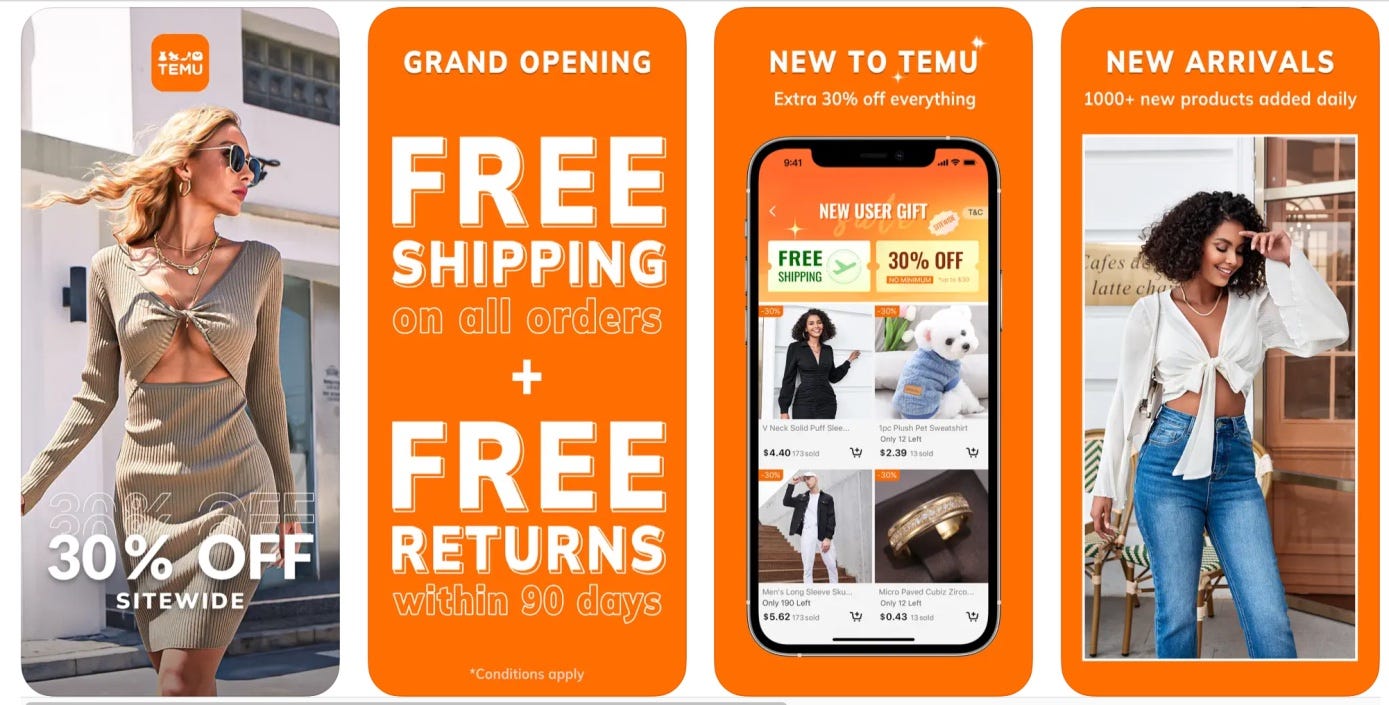
#1 most-downloaded shopping app globally for the third consecutive year
Ultra-low prices via direct-from-manufacturer sourcing model
Highly addictive gamified shopping experience drives repeat engagement
530M+ monthly active users worldwide; 133M in the U.S. alone
Explosive growth across Europe, Latin America, and Asia-Pacific
✦ Cons
Product quality is inconsistent — what you see isn’t always what you get
Significant data privacy concerns given Chinese ownership (PDD Holdings)
U.S. tariff changes (de minimis exemption removal) damaged growth momentum
Shipping times from China can be lengthy for non-warehoused items
Intellectual property and counterfeit controversies
📊 Temu hit 1 billion cumulative downloads in Q2 2025 — a stunning achievement for a brand launched only in 2022. U.S. tariff headwinds dented growth in mid-2025, but European expansion is filling the gap.
#3 Walmart
Retail · Big-Box & Grocery
✦ Pros
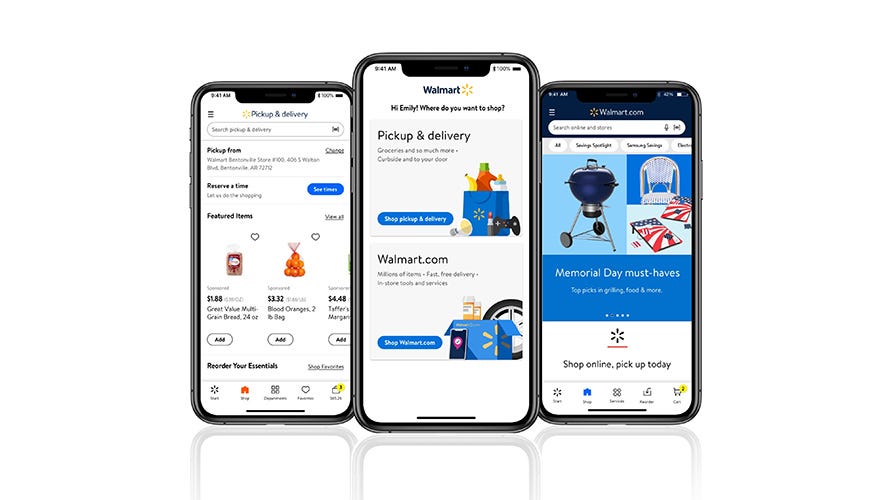
Best-in-class grocery pickup and same-day delivery integration
Exceptional 4.7-star Play Store rating from 3.5M+ reviews
Walmart+ membership rivals Amazon Prime in value
Seamless in-store and digital experience with Scan & Go
Strong price-match tools and Savings Catcher features
✦ Cons
Third-party marketplace quality control lags Amazon significantly
App performance can lag on older devices
Walmart+ free trial conversion tactics feel pushy to some users
Online grocery selection varies significantly by region
📊 Whatnot became the fastest-growing shopping app in the U.S. in 2025 but still trails Walmart, which serves approximately 255 million customer visits per week across all channels.
#4 Starbucks
QSR · Coffee & Beverages
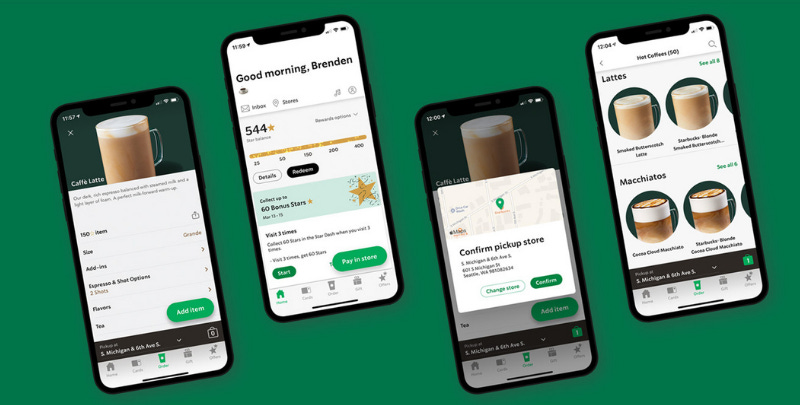
50M+Active Loyalty Members - holds roughly $1.78 billion to $1.85 billion in unspent preloaded cash
✦ Pros
The gold standard for QSR loyalty — Starbucks Rewards is best-in-class
Mobile Order & Pay drives ~21% of all U.S. transactions
Deeply personalized offers, stars, and gamified reward challenges
Seamless Apple Pay / Google Pay and in-app payment integration
Highly intuitive UI with easy menu customization
✦ Cons
Mobile order congestion at peak hours frustrates in-store customers
Recent loyalty program changes (point devaluations) angered power users
Menu complexity can make app navigation slow for new users
App exclusivity on some promotions feels unfair to non-app users
📊 Starbucks pioneered the QSR app playbook — at its peak, it processed more U.S. mobile payments than Apple Pay. Competitors have been trying to catch up ever since.
#5 McDonald’s
QSR · Fast Food
#1 Most Downloaded Food App
✦ Pros
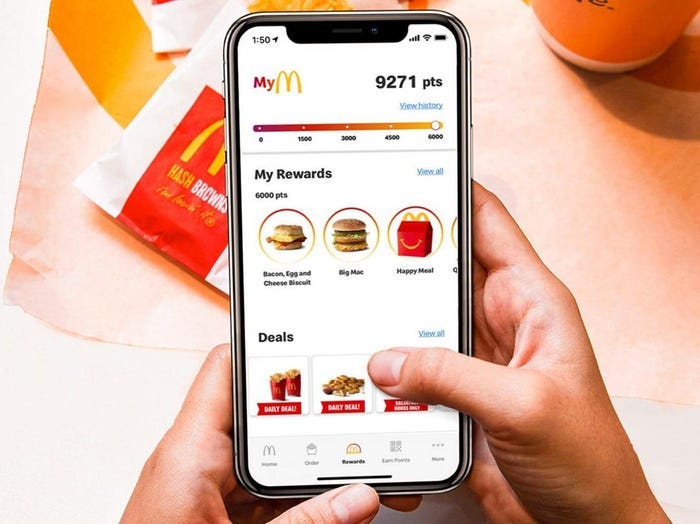
Ranked #1 most-downloaded food & drink app globally in 2025
Exclusive app-only deals (Free Fries Fridays, BOGO offers) drive strong downloads
MyMcDonald’s Rewards loyalty program now spans 20,000+ locations
Mobile order and pay active at virtually all U.S. restaurants
Monopoly and other in-app games create viral engagement
✦ Cons
Daily active user engagement lags behind Starbucks despite high install rate
App performance and stability complaints are common in reviews
Promotions are the primary driver of downloads — retention without deals is weak
Loyalty points expire and redemption rules are confusing to some users
📊 McDonald’s app peaked midday (lunch), revealing untapped breakfast opportunity. The chain has leaned heavily on deal-driven downloads — the challenge now is building habitual daily use.
#6 Target
Top 10%U.S. App Store Rank
✦ Pros
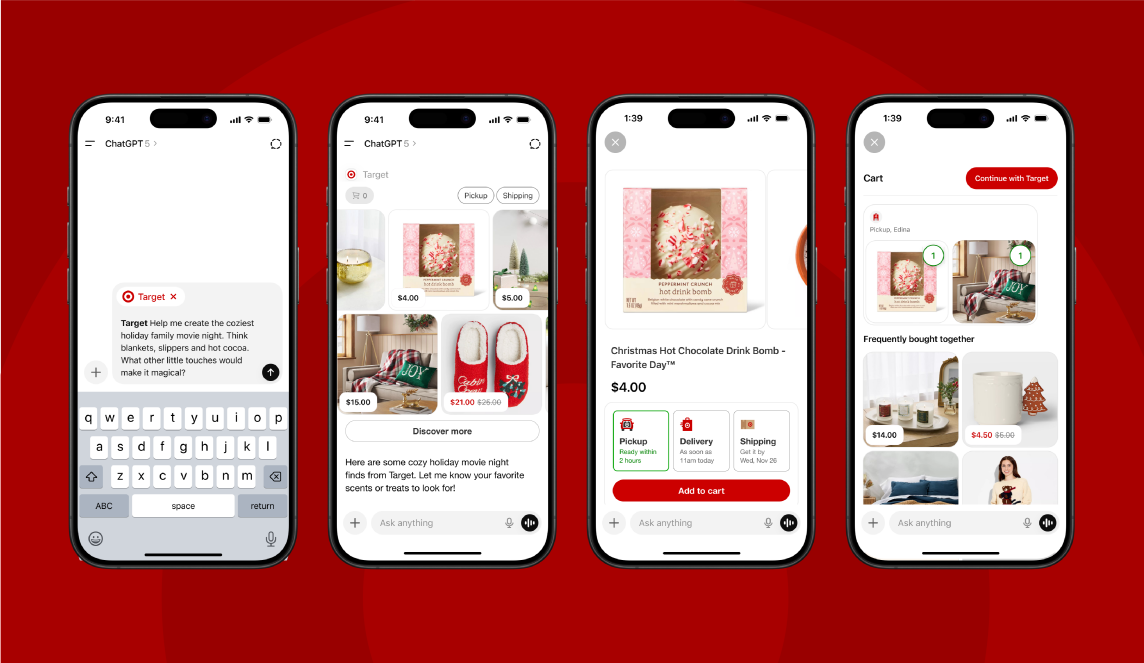
Seamless Drive Up (curbside) feature is a customer favorite
Target Circle loyalty program offers personalized 1% earnings on every purchase
Exceptional 4.8 iOS / 4.7 Android ratings
In-store barcode scanning and aisle navigation built into the app
Same-day delivery via Shipt integrated directly
✦ Cons
Smaller product catalog than Amazon or Walmart for non-general merchandise
Circle program changes in 2024 reduced appeal for budget shoppers
AI referral traffic still represents <1% of total visits — not fully leveraged
Limited international reach constrains global relevance
📊 Target ranked in the 91st percentile for overall app downloads in 2025, with AI-driven referral traffic to its site growing over 1,600% — a signal of how generative AI is beginning to reshape retail discovery.
#7 Chipotle
QSR · Fast Casual
✦ Pros
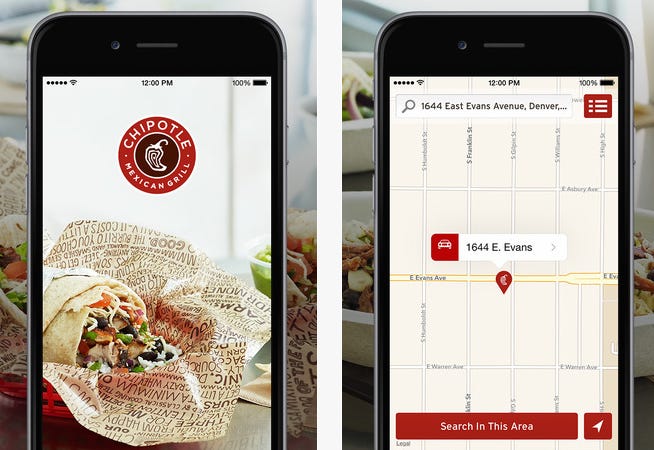
Highly rated app with exceptionally smooth digital ordering experience
Chipotle Rewards is one of the most generous QSR loyalty programs
Exclusive “Extras” menu items available only through the app
Gamified challenges (Guac Mode, Freepotle) drive recurring engagement
Order customization that perfectly mirrors the in-store line experience
✦ Cons
Digital order pickup lanes at restaurants can create bottlenecks
Portion sizes reportedly smaller for digital vs. in-person orders
App can be slow during peak lunch and dinner hours
Limited-time offerings sell out quickly; app lacks real-time inventory signals
📊 Chipotle is widely considered the fast-casual app benchmark. Its digital sales consistently exceed 35% of total revenue — proof that a great app experience translates directly to the bottom line.
#8 SHEIN
✦ Pros
Extraordinary fashion breadth with thousands of new SKUs added daily
7-day production cycles — trend-to-market faster than any competitor
Strong organic retention; open rate stayed above 80% even as ad spend fell
~$58.5B in estimated 2025 revenue; dominant with Gen Z and millennial women
App-exclusive flash sales, daily check-in rewards, and loyalty coins
✦ Cons
Persistent criticism over labor practices and environmental impact
Frequent intellectual property/design theft allegations from independent designers
Data privacy concerns given Chinese corporate ownership
Product quality is highly variable; sizing is inconsistent
Shipping times from overseas can be 2–4 weeks for many items
📊 SHEIN ranked #2 globally in shopping app downloads in 2025 behind Temu. Its production speed and pricing model have forced legacy fast-fashion brands like H&M and Zara to dramatically accelerate their own digital strategies.
#9 Domino’s Pizza
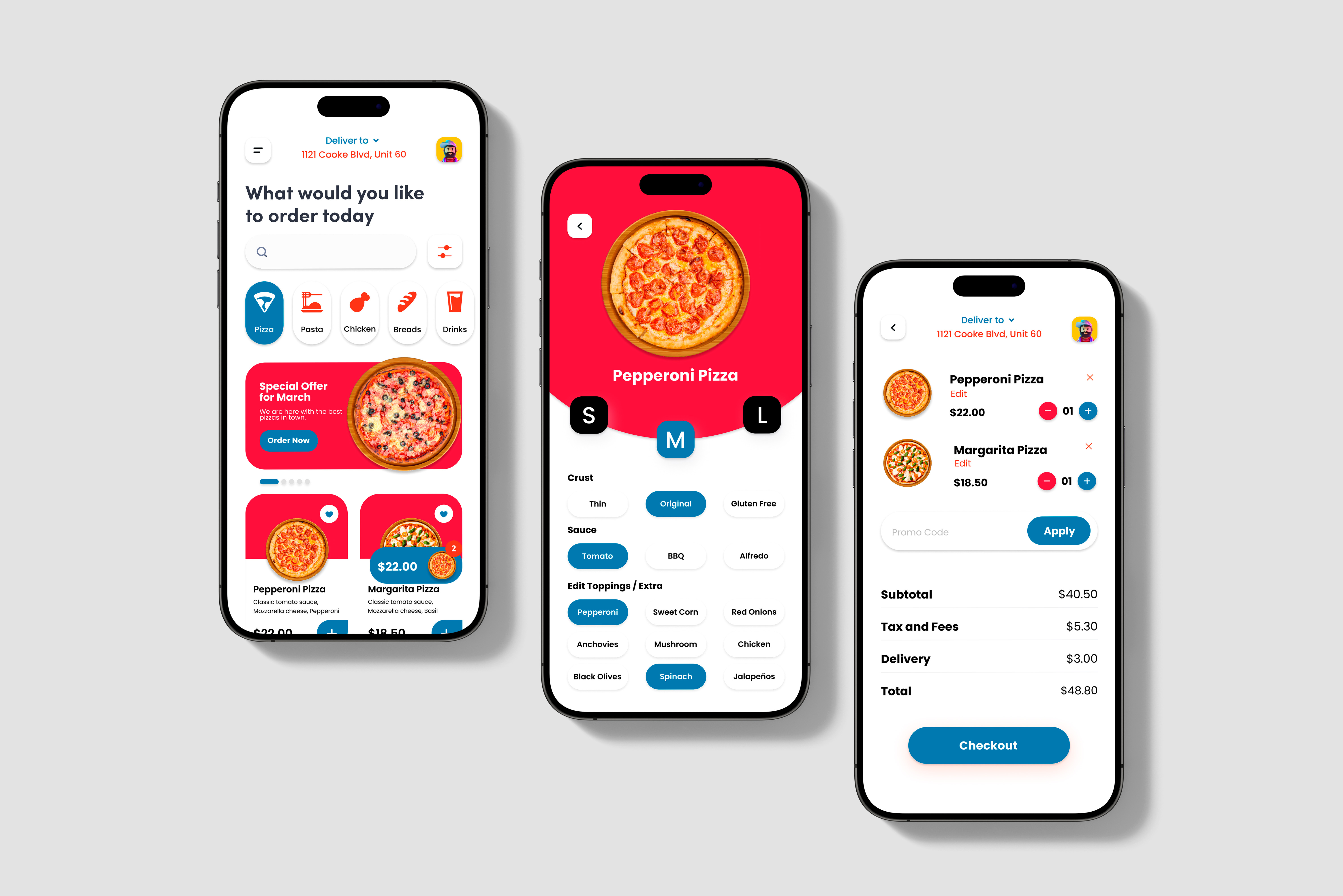
Remember the pizza tracker? They’ve come a long way.
✦ Pros
More than half of all U.S. Domino’s sales now flow through digital channels
Supports ordering across 15+ platforms including smartwatch and smart TV
Piece of the Pie Rewards loyalty program is one of the industry’s oldest and most trusted
Live order tracker is a beloved feature that sets expectations perfectly
Consistently lauded as a tech-forward QSR innovation leader
✦ Cons
Recent loyalty program changes frustrated long-term customers
UI feels dated compared to more modern QSR app experiences
Delivery radius limitations mean app utility varies widely by location
Coupon stacking restrictions have become more aggressive
📊 Domino’s bet on tech before it was fashionable — and won. The company famously calls itself “a tech company that sells pizza.” With 50%+ digital sales, that strategy has been validated completely.
#10 Instacart
✦ Pros
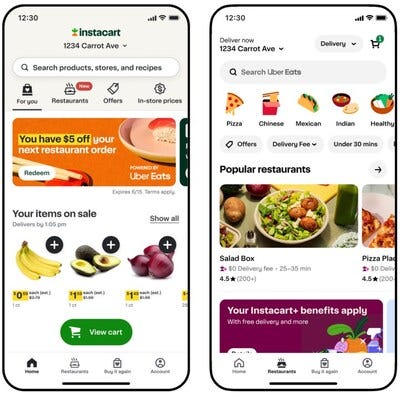
Access to 1,500+ retail partners in a single app — true grocery aggregation
Same-day delivery and curbside pickup across most U.S. markets
Outstanding 4.8 iOS / 4.4 Android ratings reflect genuine customer satisfaction
Price comparison across stores in a single order
Instacart+ membership offers free delivery and exclusive savings
✦ Cons
Fees (delivery, service, tip) can add 20–40% above in-store prices
Item substitution quality varies widely by shopper
Intense competition from Walmart+, Amazon Fresh, and DoorDash Grocery
Shopper availability can drop in rural and suburban markets
📊 Instacart’s aggregation model — shop any store from one app — remains its most powerful differentiator. The key question for 2026: can it maintain market position as Walmart and Amazon integrate grocery delivery more deeply into their own ecosystems?
Honorable Mentions
Shop
Why it’s rising fast:
Aggregates thousands of Shopify brands
Built-in Shop Pay (fastest checkout in retail)
Strong order tracking + discovery feed
Becoming a “meta-layer” for DTC commerce
Quietly becoming the operating system for DTC shopping
Sephora App
Why it excels:
Loyalty + gamification done right
AI try-on + beauty tech integration
Strong omnichannel tie-ins (store + app)
One of the best examples of experiential retail in mobile.
Zara App: Built for Speed + Fashion Discovery
Zara’s app is essentially an extension of its fast-fashion engine.
What it does well
Always-on newness: The app constantly surfaces new drops, collections, and campaigns, mirroring Zara’s rapid product cycles
Store Mode integration: When you’re in-store, the app shifts into a companion tool with QR codes, e-receipts, and purchase tracking
Frictionless omnichannel:
Buy online, pick up in store
Return anywhere (online or in-store purchases)
Highly visual experience: Editorial-style layouts that feel closer to Instagram than traditional ecommerce
What it’s really optimized for
👉 Inspiration → impulse → fast checkout
UNIQLO App: Built for Utility + Product Confidence
The Uniqlo app takes almost the opposite approach. It’s less about discovery and more about helping you make the right purchase.
What it does well
Scan + Shop: Scan an item in-store to instantly find sizes, colors, and nearby availability
Fit + sizing tools: Features like MySize Assist help recommend sizing based on your body
Inventory transparency: Real-time stock checks across stores and online
App-exclusive pricing + offers
Strong utility features:
Back-in-stock alerts
Reviews with detailed fit info
E-receipts and purchase history
What it’s really optimized for
👉 Confidence → accuracy → repeat purchase
What These Rankings Tell Us About the Future of Mobile Commerce
The retail and QSR app landscape in 2025–2026 reflects a market that has matured past raw download growth and into an era defined by engagement, loyalty, and monetization. Global app downloads grew less than 1% year-over-year in 2025, yet time spent and in-app spending rose meaningfully, a clear signal that the apps already on consumers’ phones are working harder than ever.
Two dominant storylines emerge from the data. First, the Chinese discount platform insurgency: Temu and SHEIN collectively accumulated over a billion downloads in 2025, fueled by aggressive pricing, gamified experiences, and marketing spend that dwarfs what most traditional retailers allocate to mobile. The U.S. tariff changes of mid-2025 created a speed bump, but both platforms adapted quickly, redirecting growth toward Europe and Latin America while U.S. user bases stabilized.
Second, the QSR loyalty arms race is intensifying. Starbucks, McDonald’s, Chipotle, and Domino’s have all made clear that their apps are not ancillary tools, they’re the primary relationship with the customer. Digital ordering now drives a third to a half of total sales for top QSR brands, and the loyalty data these apps generate is being used to personalize offers at a level that print coupons could never achieve.
For retailers and restaurateurs watching these trends: the gap between app leaders and laggards is widening rapidly. Consumers who download and use your app spend 2.8 to 5 times more than website-only shoppers. The brands in this ranking didn’t get here by accident — they invested in design, loyalty architecture, and relentless iteration. In 2026, a mediocre app is worse than no app at all.